
Discover why mahjong is taking over the South Shore, one tile at a time.
By Joey Macari
Photography by Zoe Stoner
Gretchen Robards never set out to start a movement. She just wanted to play a game.
It began on Cape Cod, the way many great summer traditions do; over laughter, snacks and the clacking of tiles. Gretchen was introduced to Mahjong by a neighbor who’d been playing with her group of friends for over 20 years. It was love at first match.
“I learned down in Cape Cod—my neighbor had a group of friends who’d been playing together for over 20 years. They taught me, and I just loved it,” she says. “I started playing with them in the summers and even during COVID, we kept it going. We’d FaceTime on one device and play on an app on the other. They’re just the most marvelous group of ladies.”
But when the season ended and she returned to Hingham, Gretchen realized something was missing. “I’d go back and have nobody to play with, so I tried to teach my friends… and it was sort of a debacle,” she laughs. “There’s a lot of intricacies to the game—rules, etiquette—it was all over the place.”
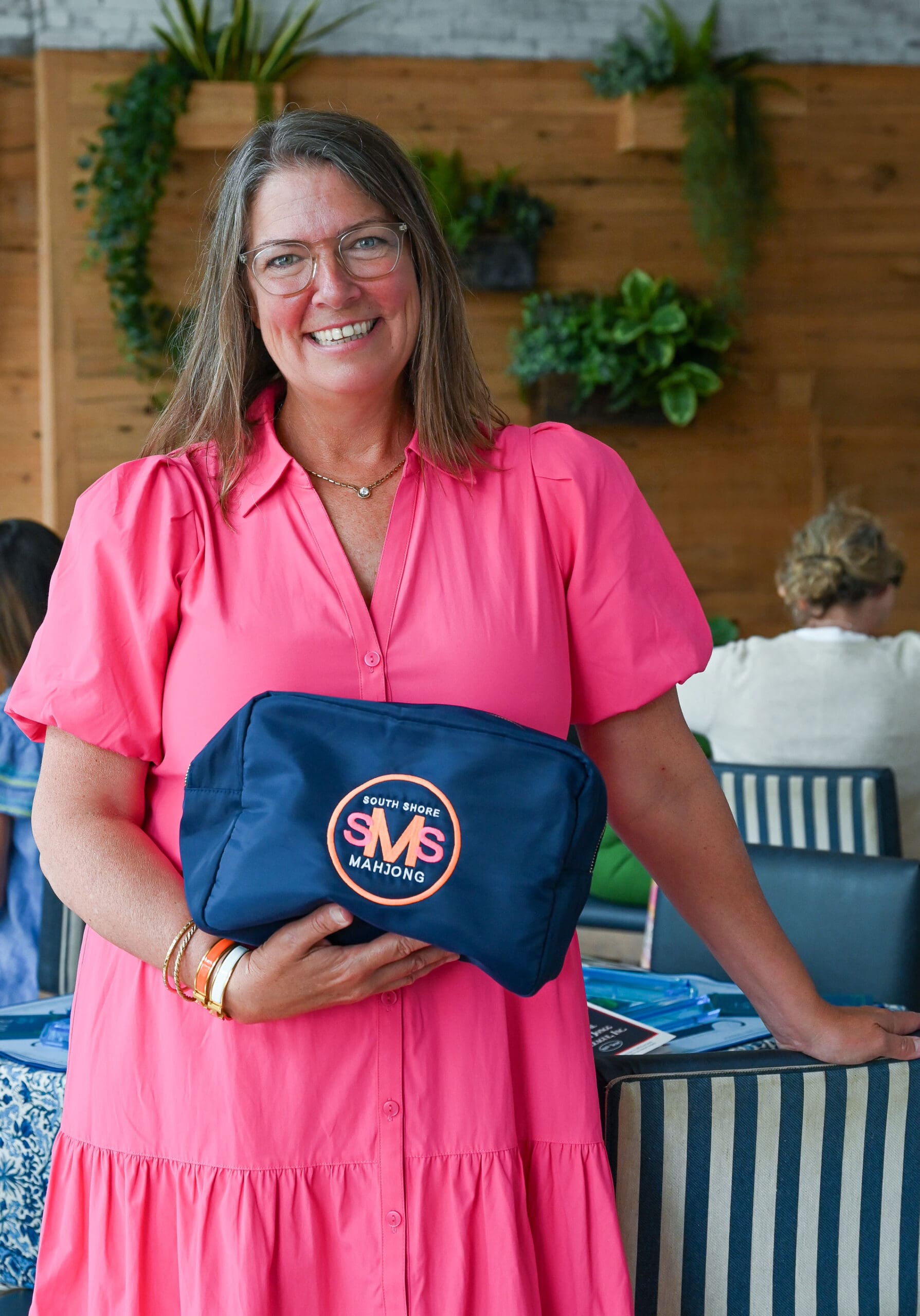
So, she did what any determined player would do: she learned how to teach. “I took a little class on how to teach it. I went through this company called Oh My Mahjong and got what they call ‘cleanup certified,’ which is their training program.” While she acknowledges the certification isn’t affiliated with the National Mah Jongg League and sometimes gets “pushback on the internet,” it gave her the confidence she needed.

“I was thinking I was just creating a pool of friends I could play with,” she says. “But it was like that old shampoo commercial, where they told a friend and they told a friend… and before I knew it, I’d taught hundreds of women from Milton and points north of the city, through the city and down to Cape Cod and Martha’s Vineyard and Nantucket. It’s kind of crazy.”
For the uninitiated, Mahjong is a tile-based game rooted in Chinese tradition that’s found a second life in living rooms, libraries and community centers across the U.S. The American version is a little like rummy crossed with poker—with a heavy dose of luck and strategy.
And yes, it looks intimidating at first.
“I think people find it intimidating because it does look confusing, but once you master the fundamentals of it, you’re in,” Gretchen explains. “Each game takes 20 to 30 minutes, so you’re focused, but then you throw the tiles in and set up again—and that’s when you catch up about kids, vacations and everything else. It has a nice balance of the social aspect, but also using your brain a little bit.”
What makes Mahjong unique is that it’s a solo strategy game played in a group setting. “You’re working independently on your hand, and in doing so, you’re challenging yourself,” Gretchen says. “You’re paying attention to what everyone else is doing. Julia Roberts has a great quote about it—she says it’s like making order out of chaos, which I love. It’s true.” Even veteran players don’t get too comfortable. “Every year, the National Mahjong League comes out with a new card,” she says. “So even if you’ve been playing for 25 years, there are fresh combinations you’re working toward. It doesn’t get old or boring.”
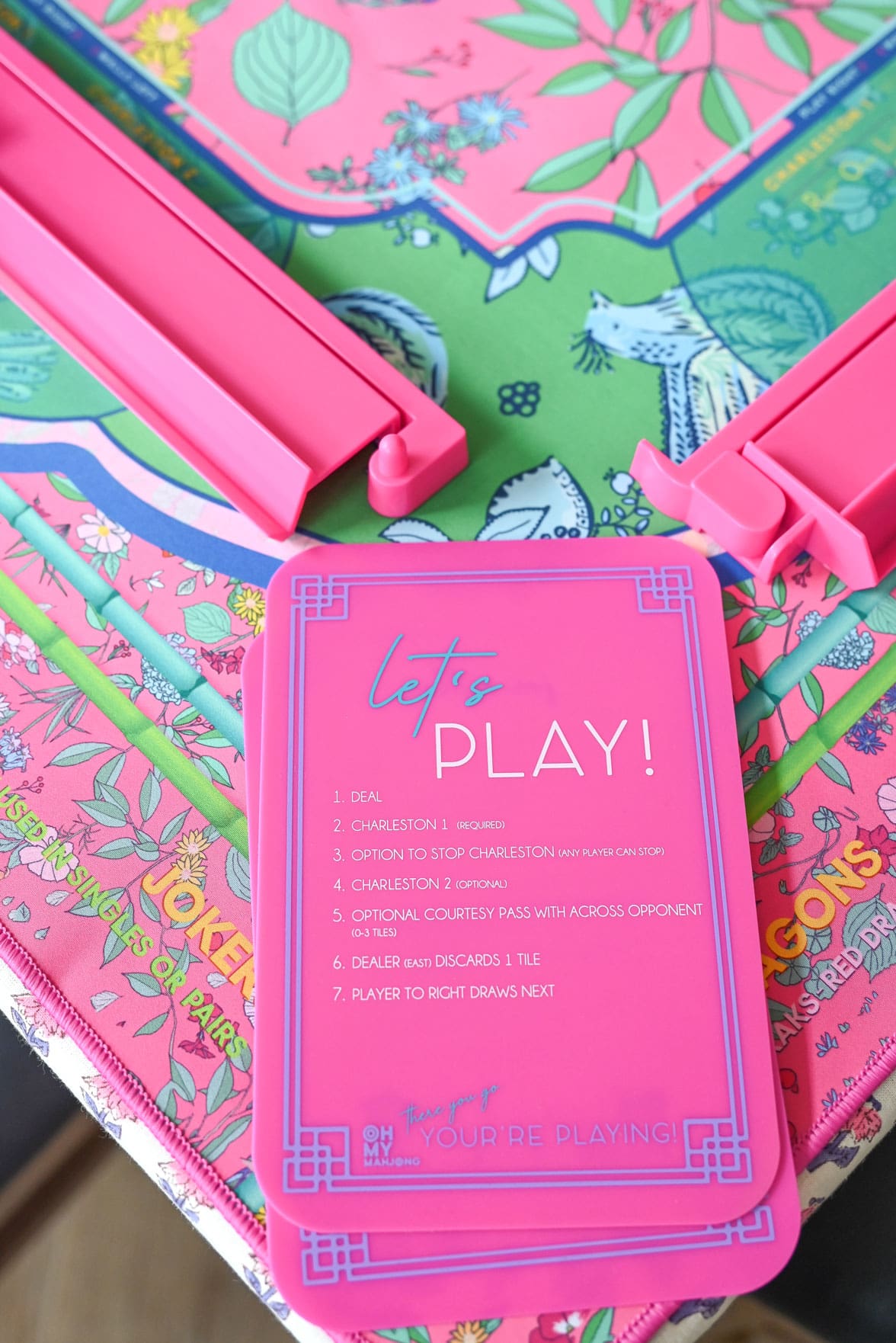
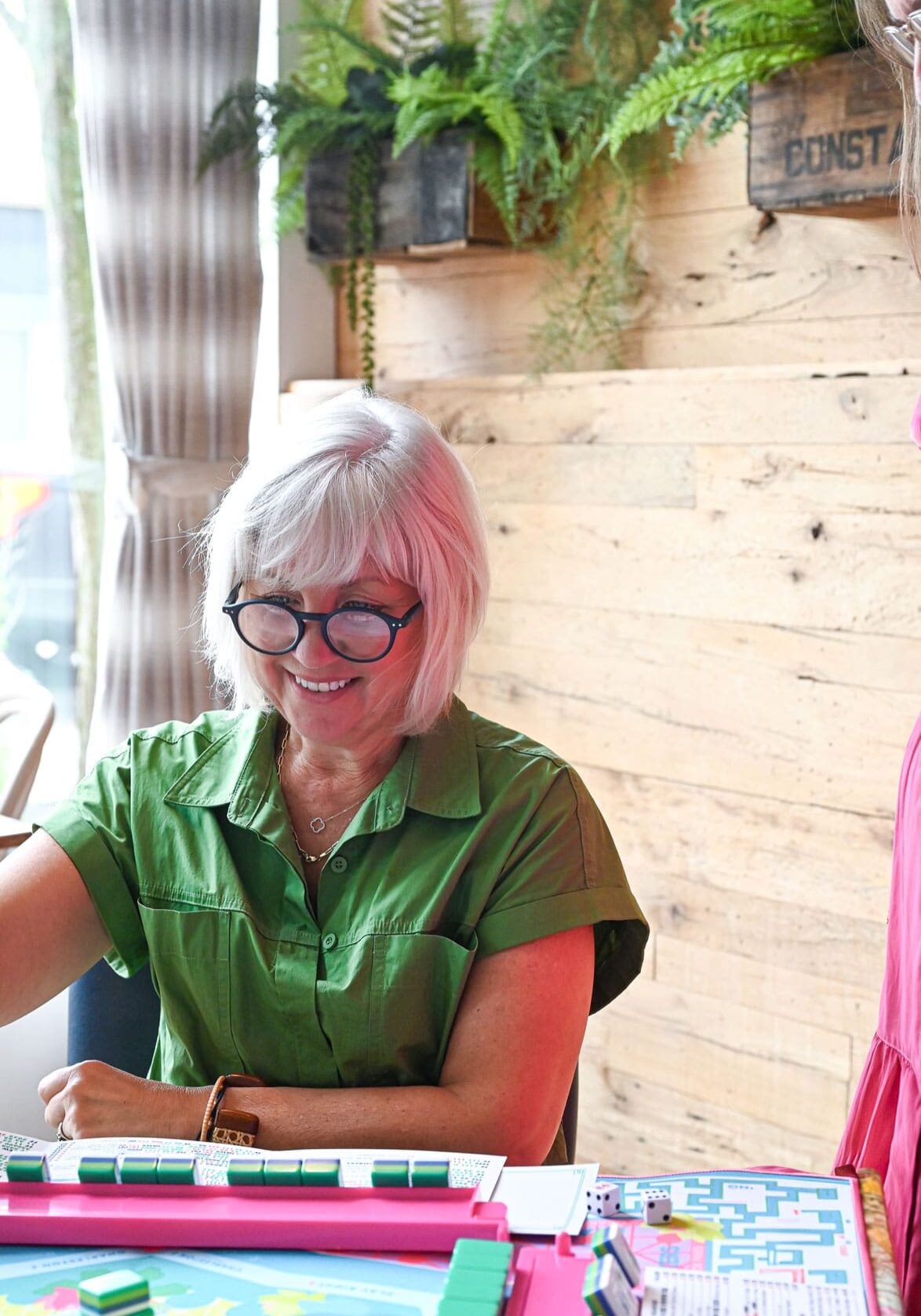
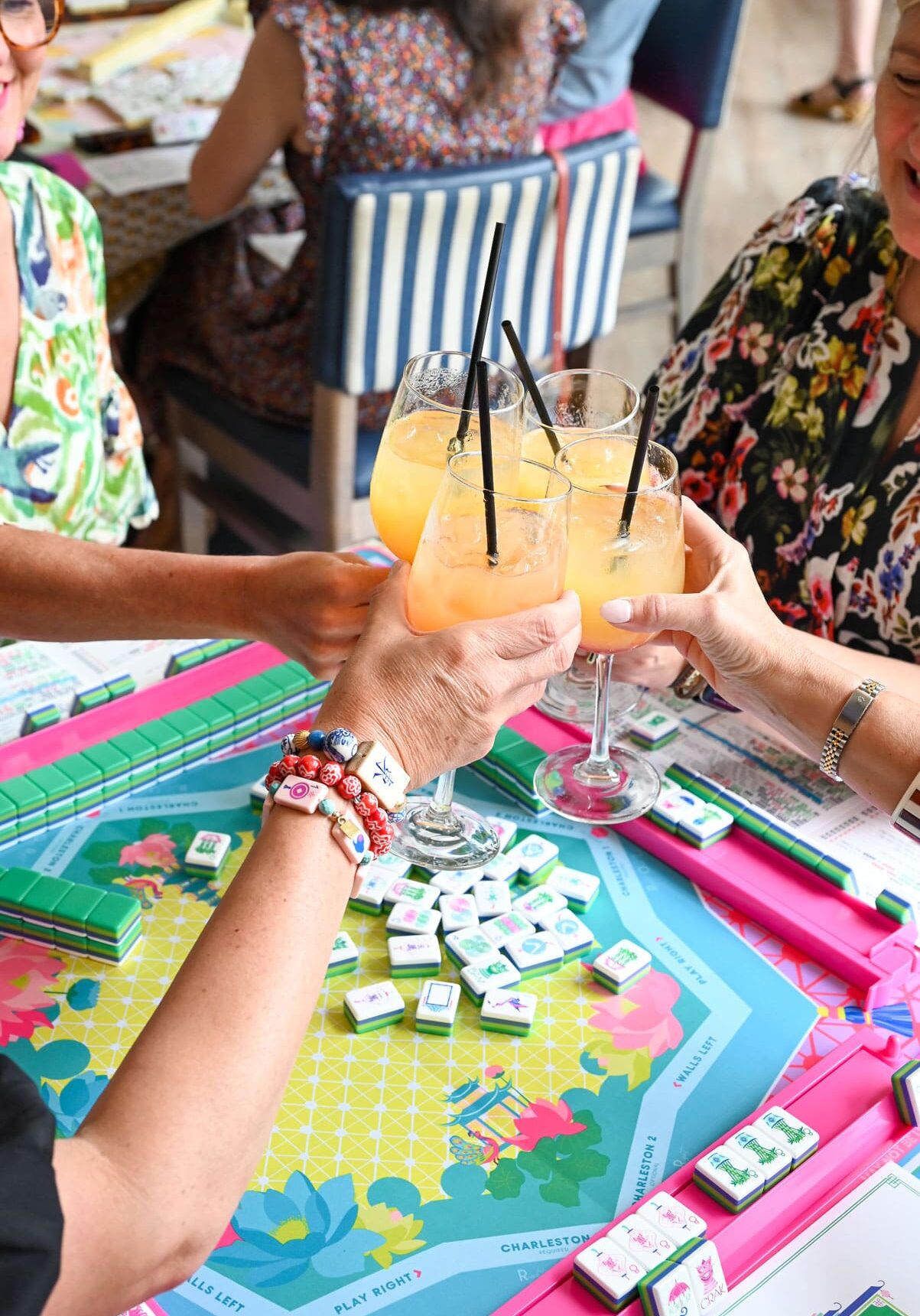
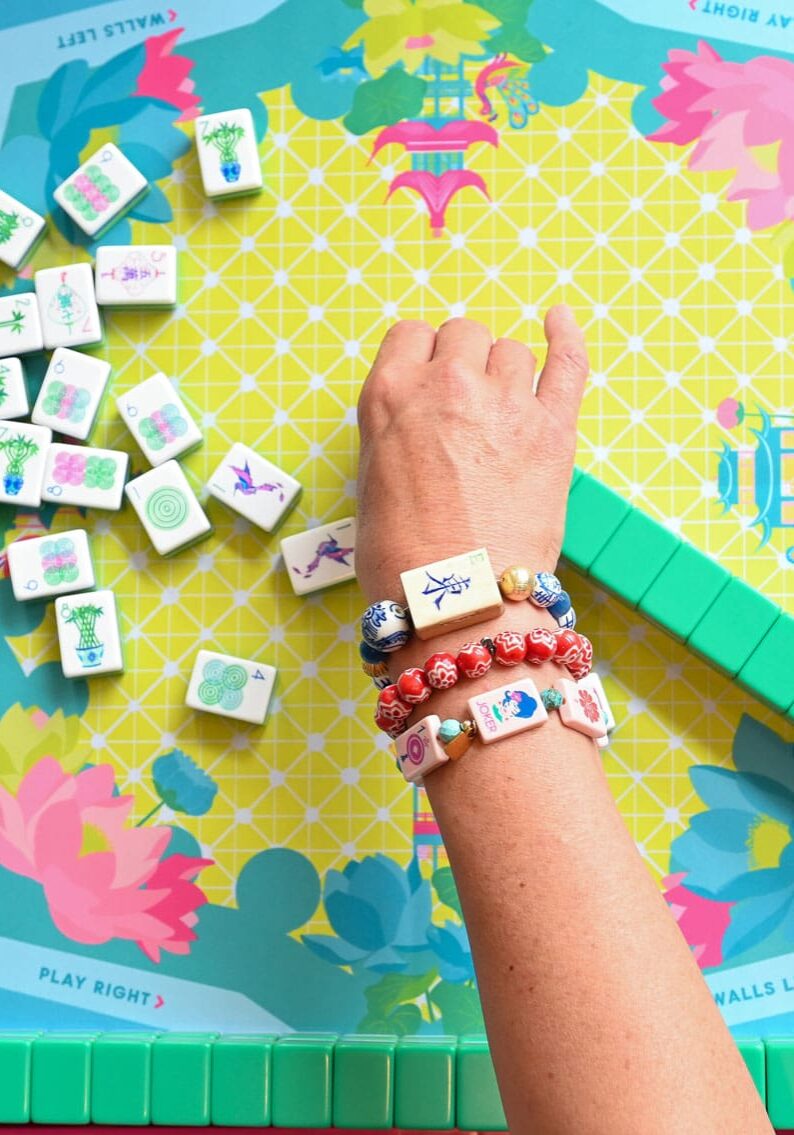
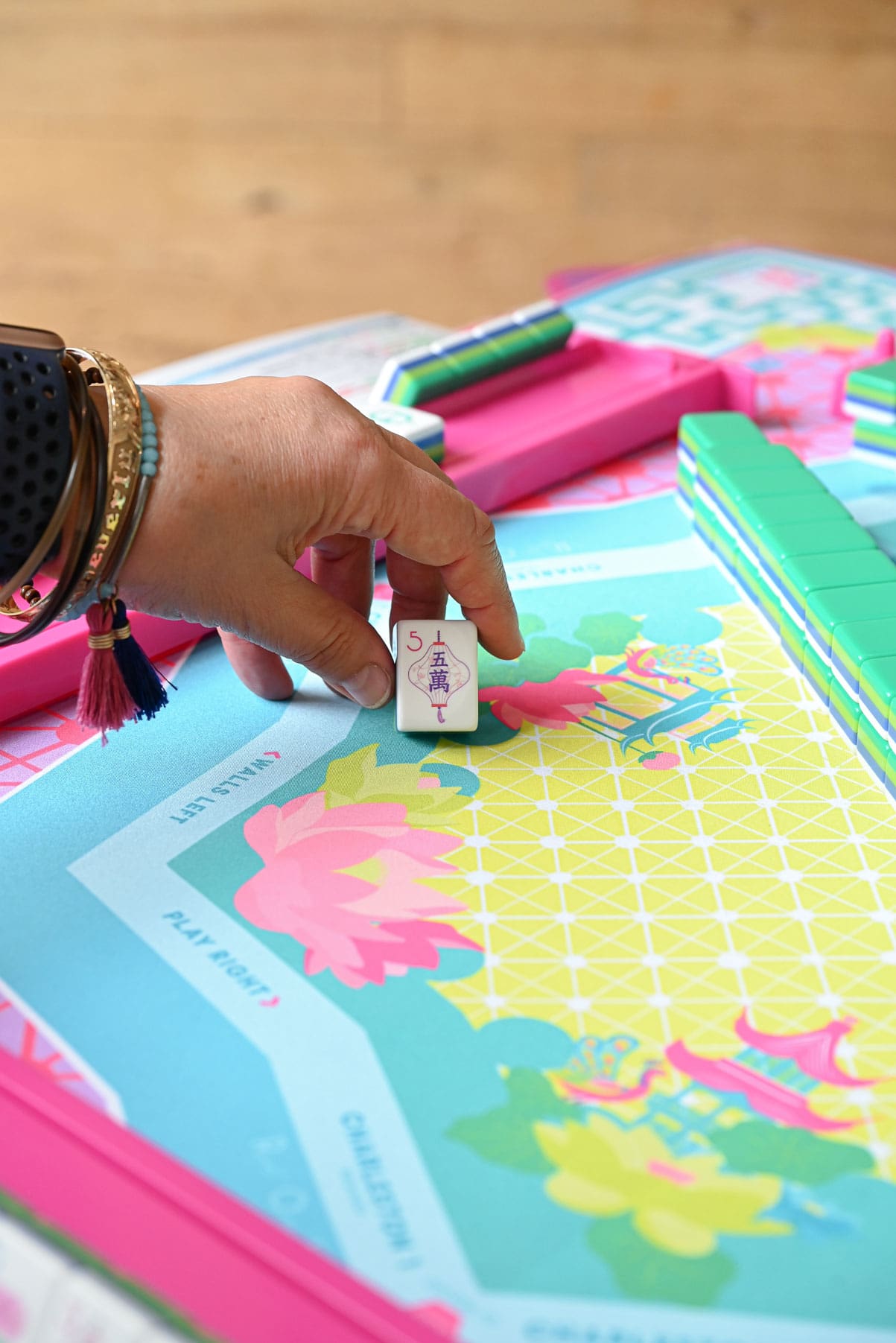
Over the past few years, the game has also gotten a glow-up. “I only teach with Oh My Mahjong tiles and mats and racks because I think they’re so beautiful,” Gretchen says. “Everybody loves the aesthetic. You can get plain white tiles from Amazon—easy peasy—but people are going all out with the decorations. There are tablecloths, themed tables, snacks, and cocktails. People are coming up with Mahjong rooms.”
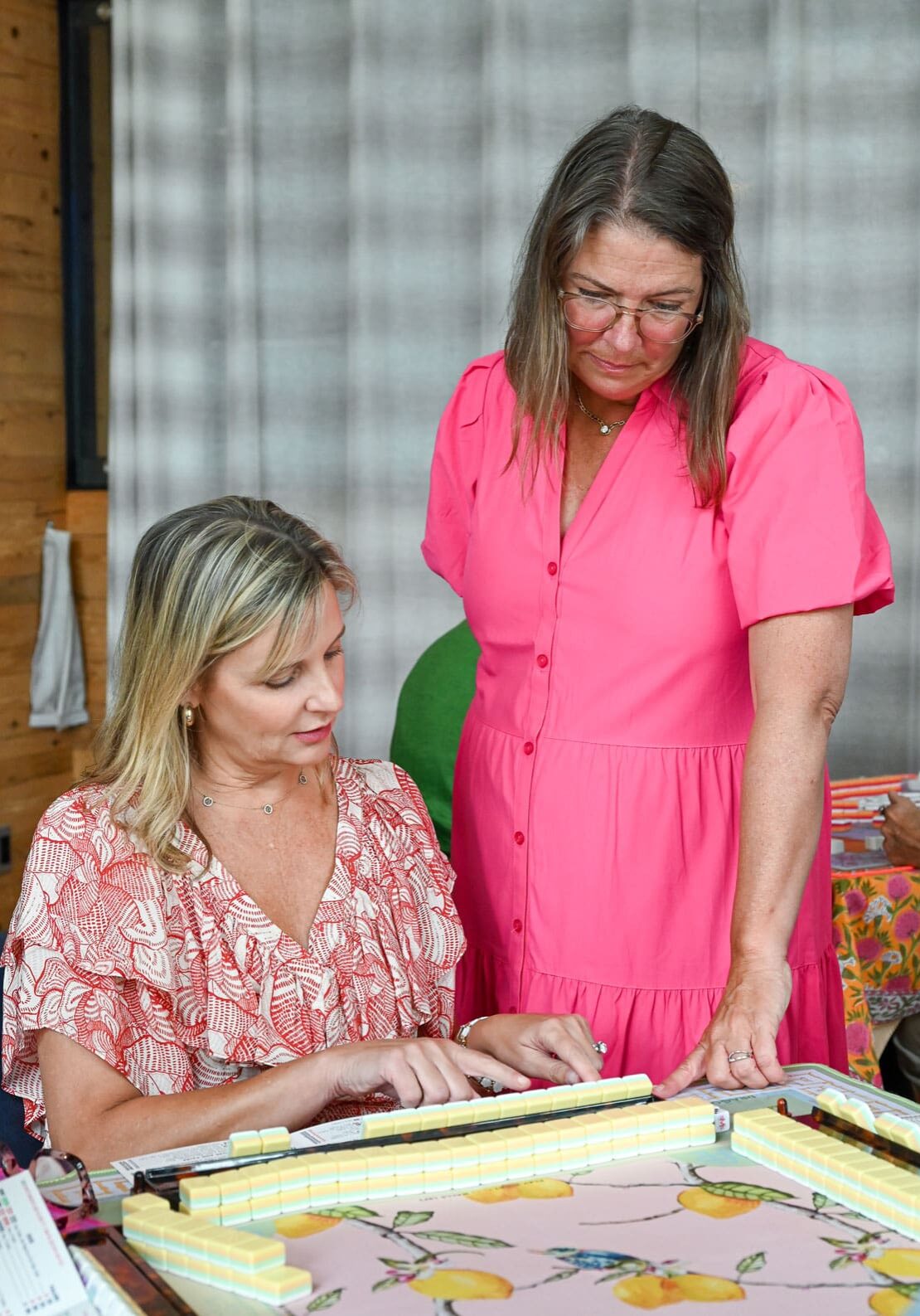
And while yes, you can sip wine and nibble on charcuterie while playing, Gretchen says the focus isn’t the drinks. “Yes, you can have wine or champagne or cocktails—but that’s not the primary focus. It’s a nice way to spend several hours with your friends.” There’s also something timeless and ageless about the game. “You could have someone in their 80s and someone in their 20s, and yet sitting over the tiles, all of that melts away,” she says. “In my lessons, I’ve had women show up solo and walk away with a new group of friends.”
In Duxbury, for example, she’s seen Mahjong catch fire. “I taught one group of players, and then their moms came, and then their friends, and then the younger moms,” she says. “All different generations have learned, and now there’s a group that gets together on Thursday night—there’s gotta be 30 women or more that play on the regular.”
That kind of momentum inspired Gretchen to launch a formal league this fall in Hingham, based at the Hingham Community Center. “It’s open to anybody on the South Shore,” she says. “It’ll be on Thursdays from 11 to 1, or Thursday nights from 6:30 to 8:30. It’s going to be a social competitive league—we’ll keep score, and have great prizes. It’s an opportunity for people to play with their friends, or for people who’ve taken lessons to have a place to go.”
She’s also planning pop-up Mahjong events at local businesses. “It’s a great way for a restaurant or store to bring people in after hours or during the daytime,” she says. “Anchor & Sail in Cohasset started doing lessons, and now they have a thriving community of players.” That sense of community—of having a “third place” outside of home or work—is a big part of Mahjong’s appeal. And according to Gretchen, anyone can learn.
“It’s like learning to drive a stick shift,” she says. “You might have to grind it out at the beginning, but then it becomes second nature. And you have to remember—it’s a game. It’s about having fun.”