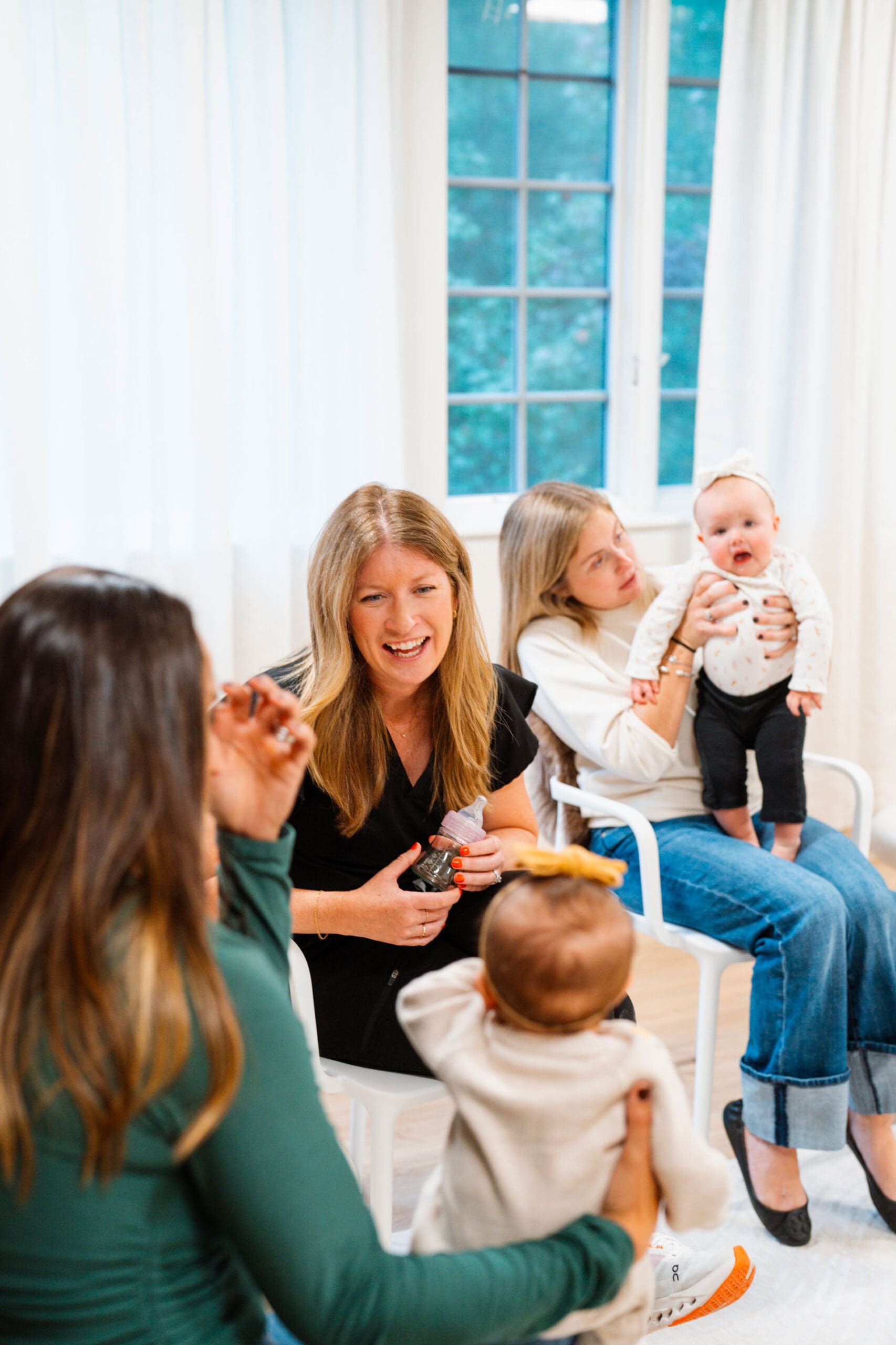
Soleo, a new holistic health center in Duxbury, offers a soft landing for moms navigating
hormones, healing, and mental health.
By Kelly Chase
Photography by Christina Hickey and Zöe Stoner
Many cultures recognize that the period after a baby is born, sometimes called the “fourth trimester,” can be an intense chapter. In South Korea, new moms can check into postpartum “sanhujori” centers, which focus on rest and recovery and offer warm meals and round-the-clock support. In some Latin American communities, postpartum is often referred to as “la cuarentena,” or quarantine, during which moms rest, heal, and bond with their baby for 40 days while family and friends help with meals and household chores.
In the United States, most postpartum moms leave the hospital two days after giving birth (three days for cesarean sections). They enter the fourth trimester with a new baby (or multiples), a follow-up appointment or two, and little guidance beyond physical recovery.
“There is no question that women need more support,” says Jaime Kullak, CNM, CNP, who works at Crown OBGYN and South Shore Hospital. “As providers, we try to do everything we can, but the resources at our fingertips are limited, the waitlists for specialists are long, and it’s the new moms—and those who are caring for them—who are left carrying the weight.”
With thousands of babies born on the South Shore each year, the gap in postpartum care has become a growing local need. Soleo, a new mental and holistic health center in Duxbury, aims to fill that gap.
“After you have a baby, you are never the same, physically and emotionally,” says Soleo cofounder Liane Dupuis, LICSW, PMH-C. “There is a hard line in the sand before and after. The moment a woman receives information that she is carrying a life, everything changes.”
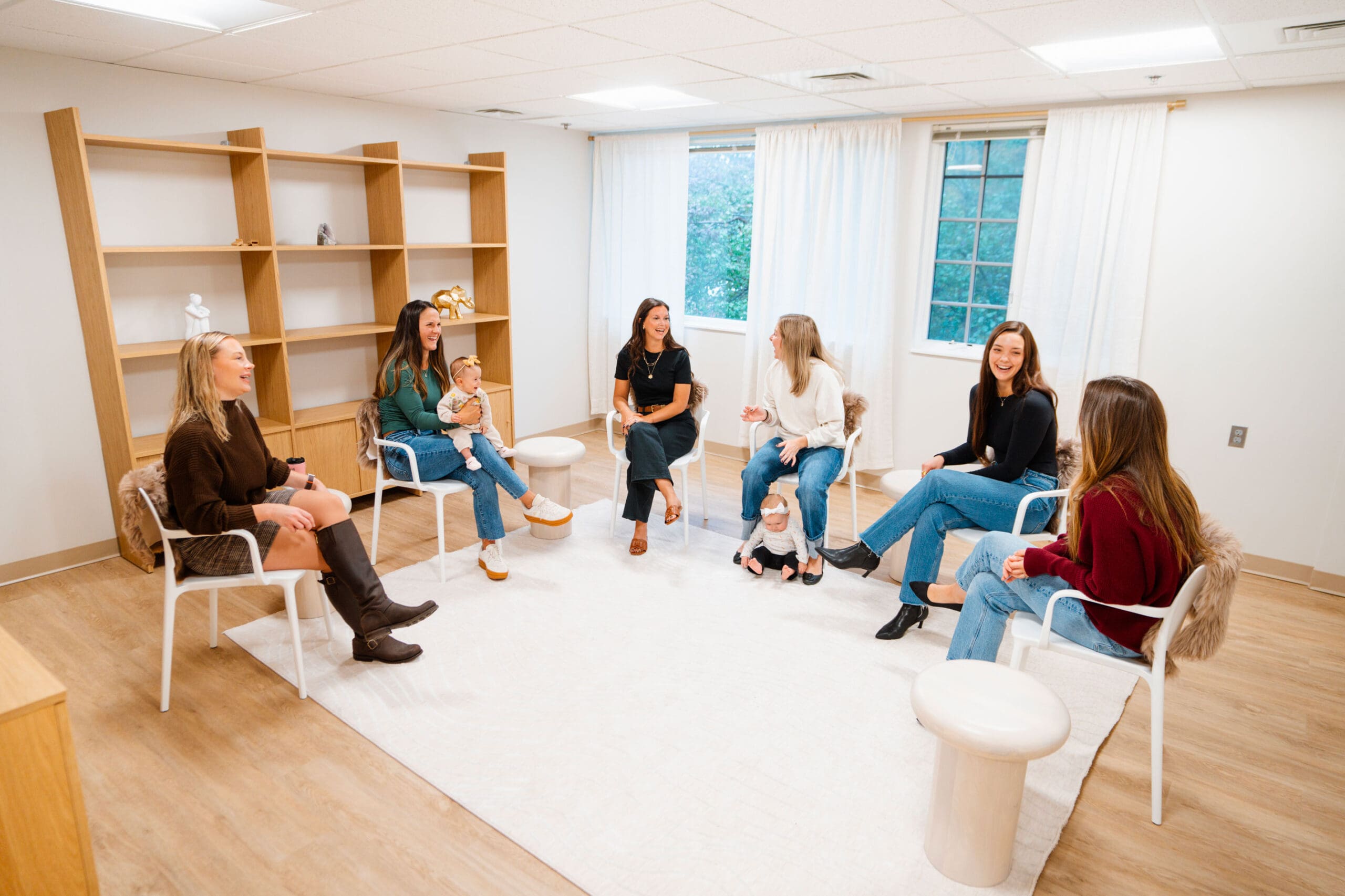
Dupuis is Soleo’s clinical director and cofounded the center with Jackie Megill, who leads business operations. Dupuis has worked as a perinatal mental health therapist for 10 years and has seen firsthand the challenges women face in this period. One of the most striking shortfalls is care for women who need higher-level support postpartum, especially those with postpartum mood and anxiety disorders (PMADs). “For perinatal moms needing more support, there was nowhere to escalate care if things got really bad; the only option locally was the emergency department, which is a hard place to send a woman because you almost know that it’s going to be a traumatizing event,” says Dupuis.
One clinically proven option for moms experiencing PMADs is a mother-baby day program, where moms attend with their babies and have access to counselors and intensive daily support. But there are only a handful of these types of programs nationwide. “There is one in Rhode Island, which is really amazing,” says Megill. “But Rhode Island is far for families here on the South Shore.”
This is a big part of why Dupuis and Megill founded Soleo. One of the facility’s main offerings is a mother-baby day program. “For so many women, the struggle is front and center, and what makes it harder is not having a place to land when things get really loud,” says Dupuis. “Women deserve better. They deserve care that is informed by clinicians who do this work and an idea that is more holistic too.”
Rich Resources in a Fragmented System
Whether a mom needs a place to land when in crisis or a trusted starting point, finding the right support at the right time can be difficult. According to Dupuis and Megill, the problem isn’t that the South Shore region is short on resources. There are many midwives, doulas, lactation consultants, and more; but in the blur of postpartum days, it can be hard to know what to look for, when to seek it out, and how to coordinate care. “There are some really talented people who help a lot of women here, but they exist in silos,” says Megill. With little time and energy to navigate it all, many moms are left to piece together support. “That’s what we’re trying to help with here—we want to cut down on those barriers, so moms aren’t left to figure it out on their own,” she says.
By visiting Soleo, a mom can have one-on-one therapy, attend a motherhood circle, and come away with a list of resources, such as the name of a holistic nutritionist, a lactation consultant who offers home visits, or a massage therapist specializing in postpartum care. Kullak says that when Megill and Dupuis first approached her, she was a big supporter of the idea. “Soleo can only augment us as providers by giving us more options for our patients,” says Kullak. “I’m hopeful it really takes off and spreads because the need is so great, and if it works, we should see more of these models pop up.”
Providing a Spectrum of
Care for Postpartum Moms
It can be confusing to distinguish between PMADs and baby blues. Dupuis and Kullak say baby blues are expected postpartum, driven by a rapid hormone crash: during pregnancy, progesterone is about 30 times higher, and estrogen can be as much as 1,000 times higher. Those levels drop back to pre-pregnancy levels within days after the placenta is delivered. The shift can trigger mood swings, sadness, irritability, and trouble sleeping. “I always say to moms that it’s completely normal to be laughing and then crying in the same sentence,” says Kullak. “Those symptoms should resolve after about two weeks.”
If symptoms last beyond two weeks or feel especially intense, moms should consider seeking mental health support or attending a therapist-led motherhood circle. “Sometimes just attending a motherhood circle that a therapist runs is enough to make moms feel less alone,” says Kullak.
Postpartum depression is also difficult to detect; Dupuis says it often doesn’t look like the stereotype of someone who is “sad and low” and unable to get out of bed. In the postpartum period, parents often have a strong motivation to power through their days, so symptoms present differently. “A lot of times it presents as irritability, agitation, or moments of rage, along with intrusive thoughts or compulsive checking behaviors that interfere with daily life,” says Dupuis.
Because fourth-trimester experiences can range from brief “baby blues” to symptoms that make daily life feel next to impossible, Dupuis says the response can’t be one-size-fits-all. To meet the spectrum of need, Soleo has built a tiered model of care. At the most intense level is its mother-baby day program, which can run up to five days a week. Moms can bring babies and access one-on-one cognitive-based therapy, group therapy, mindfulness practices, holistic offerings, and perinatal medication management when needed. “This care really has to be holistic,” says Dupuis. “Because multiple systems are impacted, we should be caring for all of these pieces, not just one.”
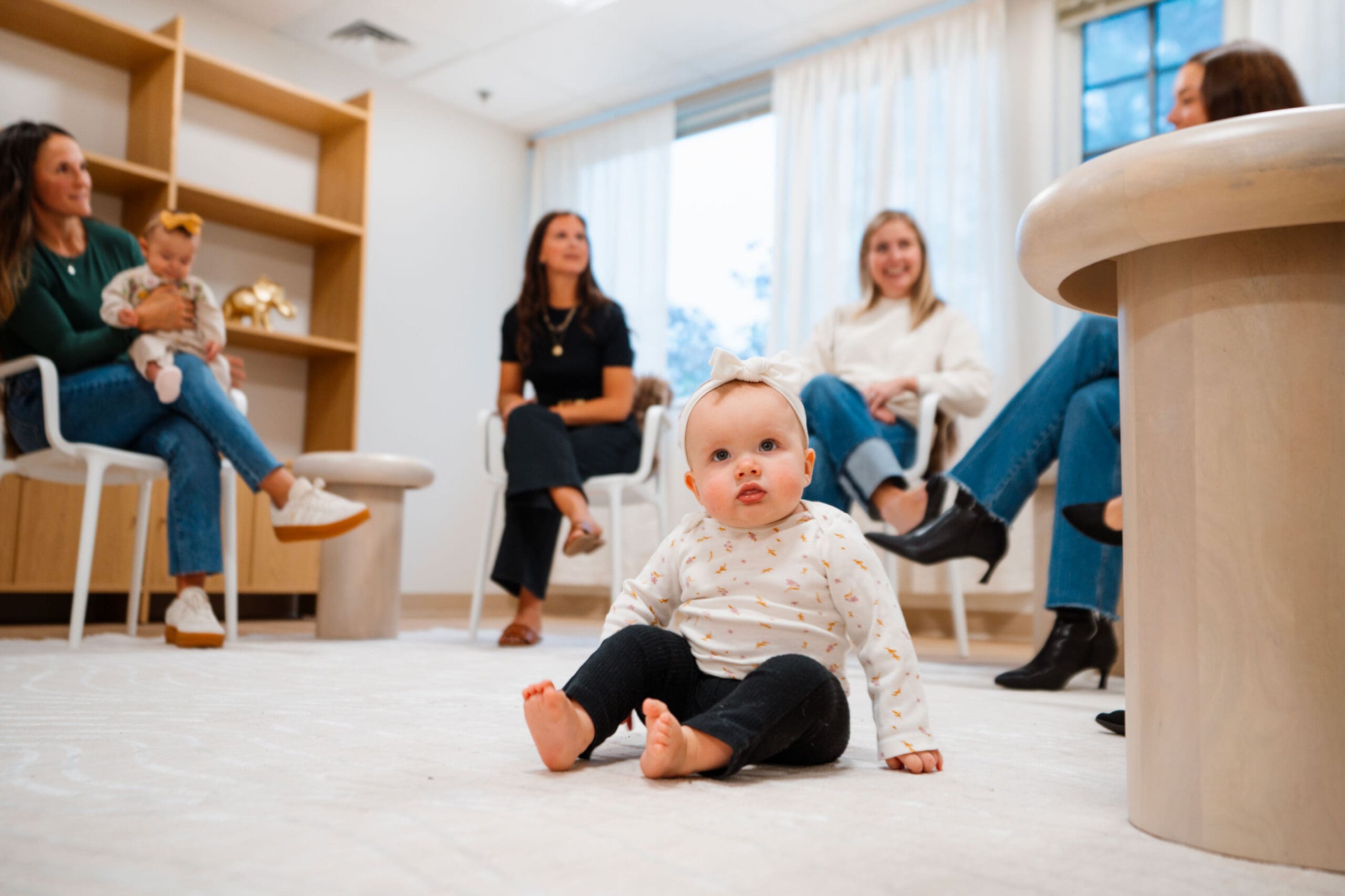
The next level is outpatient perinatal therapy with weekly one-on-one sessions with a therapist. Then the third level includes the community-driven motherhood circles, which are therapist-led peer-support groups covering a range of needs from fourth trimester “mom rage” to pregnancy after loss to infertility. “Motherhood circles and connection to other moms are so crucial postpartum,” says Kullak. “Once women have support or validation of ‘yes, I feel that way, too,’ or ‘that’s totally normal for your baby,’ they thrive.”
Watching the Vision Come to Life
During one of Soleo’s first motherhood circles, Megill and Dupuis described a typical scene for new moms: strollers parked along one side of the room, some babies were sleeping, others were feeding, binkies and burp cloths falling every which way. Then the session started. Older siblings played in the next room under supervision, and the parents talked and opened up.
According to Dupuis and Megill, the shift in the room from before the session started to after was unmistakable. “Moms arrived carrying a lot, physically and emotionally, and when it ended, everyone seemed lighter and a little more connected,” says Dupuis. “It was really affirming. We both felt ‘yes, this is exactly why we are doing this.’”
For more information, visit soleowellness.com.
For a comprehensive list of postpartum offerings in the region, visit southshorehomelifeandstyle.com.
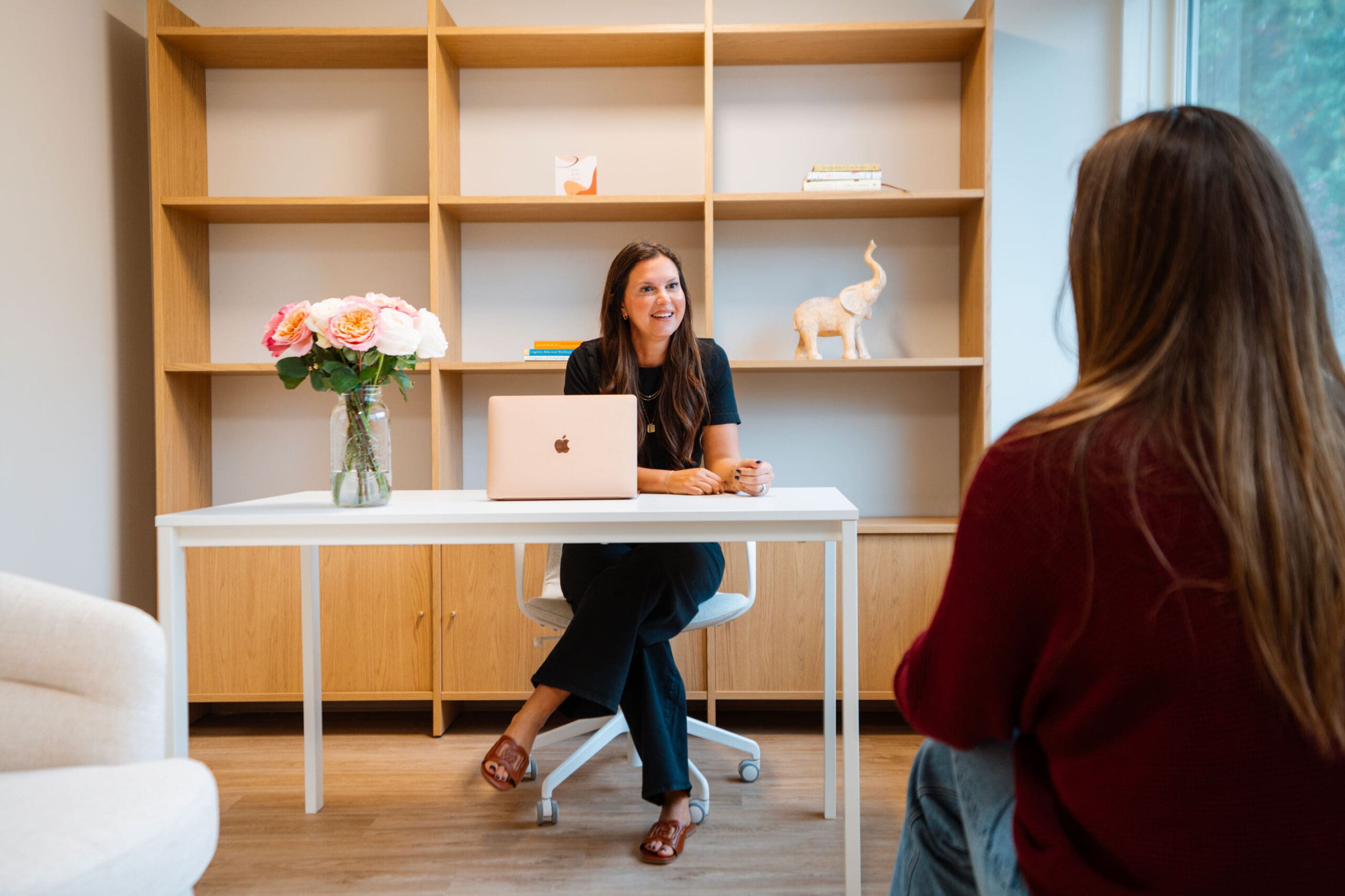
Co-Founder + Clinical
Director Liane Dupuis